

Todo
Subasta
Tipos: Aire acondicionado
6 resultados
Mont-Saint-Hilaire, Canadá
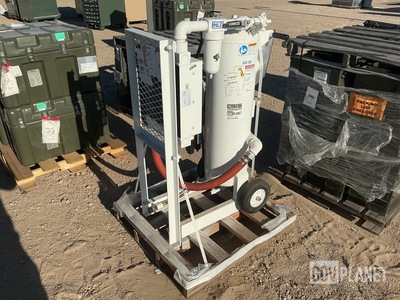
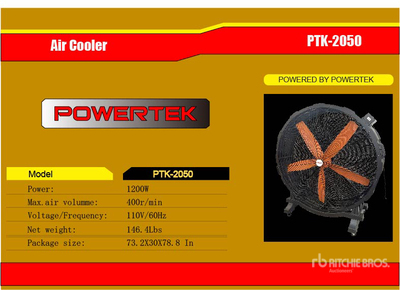
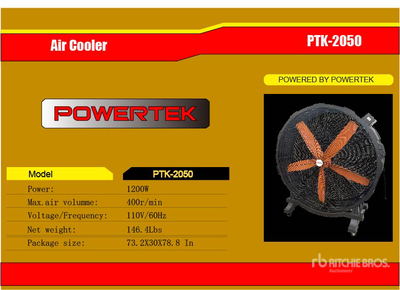
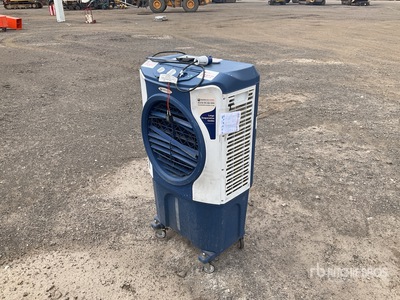
Industrial air coolers for jobsites, warehouses, and worksite cooling
Air coolers — also called evaporative coolers or swamp coolers — pull warm air through a water-saturated pad, dropping the temperature through evaporation before pushing the cooled air back into the space. Unlike a refrigerant-based air conditioner, an evaporative cooler doesn't compress gas or run a sealed loop. It moves a lot of air, uses water and a fan, and works best in dry climates where the humidity is low enough for evaporation to do real work.
On rbauction.com you'll find industrial-grade air coolers built for warehouses, manufacturing floors, livestock barns, open-sided shops, construction trailers, outdoor events, and equipment yards. These aren't the mini cooler units sold at hardware stores — these are portable evaporative coolers with high CFM ratings, large reservoirs, and the runtime to cool spaces that a residential split system can't touch.
Evaporative cooler vs. air conditioner: which one fits your application?
This is the question that decides which listing you should be browsing. Both cool air — they just do it differently, and the right choice depends on your climate and your space.
- Evaporative (swamp) coolers: Use water and a fan. Lower upfront cost, lower power draw, and they actually add humidity to the air. Best for dry climates (the Southwest, interior West, dry interior regions of Canada and Australia) and for spaces with open doors or roll-up bays — they need airflow through the space to work properly.
- Refrigerant air conditioners: Use a compressor and refrigerant cycle. Higher upfront cost, higher power draw, and they remove humidity. Best for humid climates and sealed spaces.
- Portable evaporative coolers: The middle ground for jobsite use. You roll them where the work is, hook up a water supply or fill the tank, and plug in. No ductwork, no install, no refrigerant handling.
If you're cooling a sealed office in Florida, you want an air conditioner. If you're cooling an open warehouse in Arizona, a welding shop in Texas, or a livestock barn in Alberta, evaporative cooling is usually the smarter spend.
Types and sizes you'll see in our inventory
Industrial air coolers in our auctions generally fall into a few categories:
- Portable spot coolers: Wheeled units with tanks ranging from 10 to 50+ gallons, typically rated 1,500–10,000 CFM. Good for targeted cooling around workstations or equipment.
- Large-area evaporative coolers: Heavy-duty units pushing 15,000–25,000+ CFM, often used in warehouses, agricultural buildings, and tented event spaces.
- Ductable coolers: Built for connection to flexible ducting, useful when you need to deliver cooled air into a specific zone or tent structure.
- Trailer-mounted units: Self-contained cooling on a tow chassis — common for outdoor events, oilfield camps, and temporary worksite setups.
Brand names you'll come across include Port-A-Cool, Big Ass Fans (Cool-Space), Schaefer, MovinCool, Polar King, and Aerocool. Each has model lines built around a specific CFM range and pad design, and pricing on the secondary market varies widely based on hours, pad condition, and pump health.
What to look for when buying a used air cooler
- Cooling pads: Inspect the rigid media pads (usually CELdek or aspen fiber) for mineral scaling, sagging, or rot. Pads are consumable — factor replacement cost into your bid if they're spent.
- Water pump and distribution: The submersible pump that wets the pads is a common failure point. Confirm it cycles on, distributes water evenly across the top header, and doesn't whine or cavitate.
- Reservoir and float valve: Check the tank for cracks, heavy sediment, or algae buildup. The float valve should shut off cleanly — a stuck float means overflow or a dry pump.
- Fan motor and blades: Spin the fan by hand for bearing noise. Belt-driven units should have a tensioned, uncracked belt; direct-drive units shouldn't show wobble or amp draw spikes at startup.
- Housing and frame: Galvanized or polyethylene housings hold up better than painted steel. Look for rust-through near the sump, especially on units that ran with hard water.
- Power requirements: Confirm the voltage and phase match what you have on site. Larger industrial coolers run 230V or 460V three-phase — don't assume a standard 120V outlet will do.
Buy used air coolers at Ritchie Bros.
Browse our active listings for portable evaporative coolers, large-area swamp coolers, and trailer-mounted units from Port-A-Cool, Schaefer, Big Ass Fans, and other industrial brands. Each lot includes inspection details, photos of the pads, pump, and motor, and full spec data so you can bid with a clear picture of what you're getting. New air coolers are added to rbauction.com every week — if you also need to round out a fleet of heating gear, take a look at our heating and cooling equipment and light towers listings while you're here.